


 |
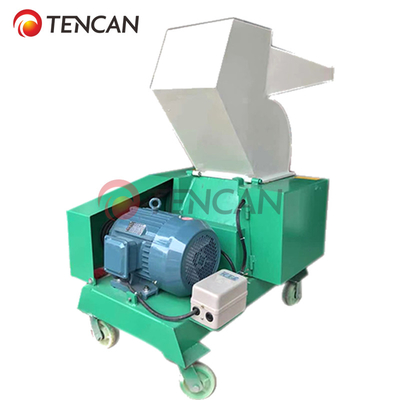
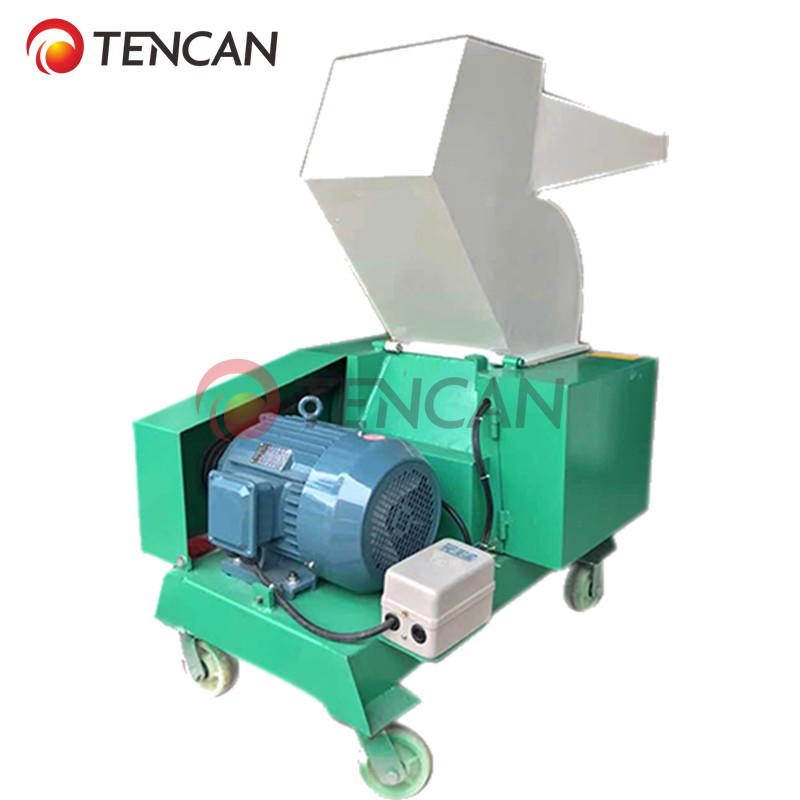
Tough Welded Steel Crusher Machine For Recycling And Restoring Plastics
Product Details:
| Place of Origin: | China |
| Brand Name: | TENCAN |
| Certification: | CE&ISO |
| Model Number: | FK-300 |
Payment & Shipping Terms:
| Minimum Order Quantity: | 1set |
|---|---|
| Price: | negotiable |
| Packaging Details: | Plywood case with foam |
| Delivery Time: | 7-14 working days after getting full payment |
| Payment Terms: | T/T,Western Union, |
| Supply Ability: | 300sets/month |
|
Detail Information |
|||
| Dia Of Rotary Knife: | 300mm | Rotary Knife: | 3pcs |
|---|---|---|---|
| Length Of Rotary Knife: | 300mm | Fixed Knife: | 2pcs |
| Capacity: | 180-250kgs/h | Screen Hole Dia: | 8-12(mm) |
| Power Supply: | 3ph 380V | Power: | 4kw |
| Inlet Size: | 380*200(mm) | ||
| Highlight: | Tough Welded Steel Crusher Machine,250kgs/h Steel Crusher Machine,Restoring Plastic Crusher Machine |
||
Product Description
China Tencan Tough Welded Steel Plastic Crusher For Recycling And Restoring All Kinds Of Plastics
Introduction of Plastics Crusher
Plastics pulverizer is divided into claw knife type crusher and flat knife type crusher. Claw knife type crusher is mainly suitable for crushing thick materials, hard material blocks and heads or hard and easily rolling plastics, such as bottles, rubber heads, PVC pipes, wires, bottles, rubber, silica gel or materials with arc; The flat knife crusher is applicable for crushing plastics such as boxes, thin pipe fittings, blow molded parts, bottles, shells, bottle embryos, PE thin plastic products such as PC films, PET bottles, plates, etc.

Characteristics of Plastics Crusher
1) Sealed bearing is adopted to keep the bearing rotating well for a long time.
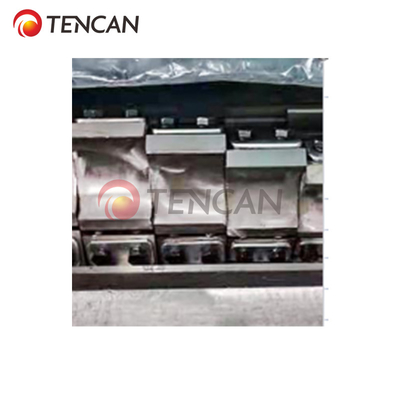
2) Design of the knife is reasonable, it is adopted with alloy steel blade, the output products are evenly granulated, the cutter seat is treated by heat shrinking and tested by strict balance. beautiful and generous of out-looking design.
Specifications & Parameters of Plastics Crusher
| Specifications & Parameters of Plastics Crusher (Claw Knife Type) | ||||||
| Model | CK-180 | CK-250 | CK-300 | CK-400 | CK-500 | CK-600 |
|
Capacity (kgs/h) |
50-100 | 150-200 | 200-300 | 250-450 | 400-700 | 450-800 |
| Voltage | 380V-50Hz 3 Phase | |||||
|
Power (KW) |
1.5/2.2 | 4 | 5.5 | 7.5 | 11 | 15 |
|
Knife (pcs) |
9+2 | 6+2 | 9+2 | 12+2 | 15+2 | 18+4 |
| Rotate Dia (mm) | 148 | 225 | 240 | 270 | 280 | 350 |
| Screen hole Dia (mm) | 6 | 8 | 8 | 10 | 10 | 10 |
|
Inlet Size (mm) |
110*180 | 250*160 | 320*200 | 420*220 | 520*260 | 600*240 |
|
Weight (kgs) |
120 | 230 | 330 | 430 | 550 | 780 |
|
Dimensions (mm) |
630*520*950 | 900*700*1050 | 1000*750*1180 | 1060*880*1320 | 1150*1000*1450 | 1200*1060*1650 |
|
Specifications & Parameters of Plastics Crusher (Flat Knife Type)
|
||||
| Model | FK-300 | FK-400 | FK-500 | FK-600 |
| Dia of Rotary knife (mm) | 300 | 300 | 300 | 350 |
|
Rotary Knife (pcs) |
3 | 3 | 3 | 9 |
| Length of rotary knife (mm) | 300 | 400 | 500 | 600 |
|
Fixed knife (pcs) |
2 | 2 | 2 | 4 |
| Length of rotary knife (mm) | 300 | 400 | 500 | 600 |
| Capacity (kgs/h) | 180-250 | 250-350 | 300-450 | 350-400 |
| Screen hole Dia (mm) | 8-12 | 8-12 | 8-12 | 10 |
|
Power Supply (V) |
380V-Hz 3 phase | |||
| Power | 4 | 5.5 | 7.5 | 15 |
|
Inlet size (mm) |
380*200 | 480*250 | 600*250 | 600*300 |
| Weight (kgs) | 240 | 380 | 440 | 850 |
| Dimensions (mm) | 1000*750*1250 | 1200*850* 1400 | 1300*950*1500 | 1050*1100*1600 |
Recycling and Restoring Plastics: What a Crusher Recovers
Recycling plastics is mostly a size problem before it is a material problem. Bottles, crates, pipes, sheet and offcuts arrive too large to reuse, and they have to be cut down to a free-flowing regrind before they can be re-melted, re-blended or used again in a new product. A crusher such as the FK-300 does that first step: it chops the scrap into uniform granules that can be fed to the next machine. Restoring plastics often means regrinding a part that was rejected or replaced and returning the material to the line, so the crusher sits at the start of a loop that keeps material in use instead of in waste.
How Granule Size Is Set: Screen Holes and Knife Arrangement
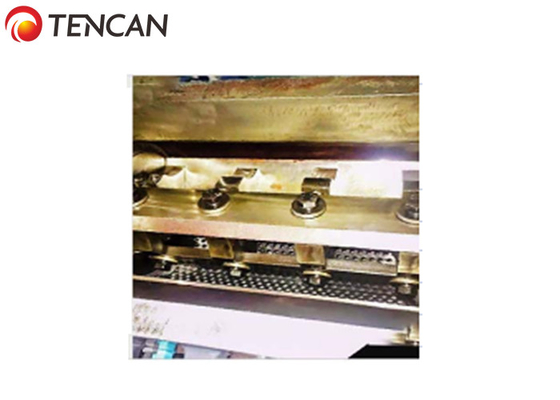
The size of the granules coming out is set by two things working together: the screen holes and the knives. Material stays in the cutting chamber until it is small enough to pass through the screen, whose holes on the FK-300 range from 8 to 12 mm; a smaller screen gives finer regrind, a larger one gives a higher throughput. The knives do the cutting: three rotary and two fixed blades on the FK-300 shear against each other as the rotor turns. Keeping the screen clear and the blades sharp is what keeps the granules even, because a worn edge tears rather than cuts and produces a wider spread of sizes.
Flat Knife or Claw Knife? Matching the Rotor to Your Scrap
Plastic crushers are built in two rotor styles, and the choice follows the scrap. A flat knife rotor, like the FK range, is the usual pick for sheet, thin-walled parts, boxes, bottles and films, where long, straight edges slice cleanly through thin material. A claw knife rotor, the CK range, is aimed at thicker pieces - blocks, thick walls, hard heads and curved or hollow items that a flat blade would tend to bounce off. Many recyclers cover both, using the flat knife machine for regular film and sheet and the claw knife machine for bulky or hard scrap, so each material is cut efficiently rather than forced through one design.
Feeding Bulk Scrap Safely: Inlet Size and Throughput
What can be fed to a crusher is limited by the inlet, and the FK-300 has an inlet of 380 x 200 mm. Parts up to that opening can be dropped in directly; larger pieces are better pre-cut so the machine is not stalled by an over-sized item. Throughput then depends on the material and the screen: the FK-300 is rated around 180 to 250 kg per hour, and a smaller screen or tougher scrap will keep the figure at the lower end. Feeding steadily rather than in surges also protects the drive and keeps the granule size consistent. As with any rotating cutter, the machine should be run closed, with the hopper and guard in place, and never opened while the rotor is turning.
Keeping the Blades Sharp and the Regrind Uniform
A plastic crusher earns its keep when the blades stay sharp. The FK-300 uses alloy-steel blades mounted in a balanced cutter seat, and sealed bearings keep the rotor turning smoothly over long runs. In use, edge wear is normal: a dull blade smears and tears the plastic, which lowers output, raises dust and widens the granule-size spread. Keeping an eye on output quality and on the ammeter is a simple early warning. Resharpening or rotating the blades on a schedule, and checking the fixed blades and screen for damage at the same time, keeps regrind uniform and protects the drive from the extra load a dull blade creates.