


 |
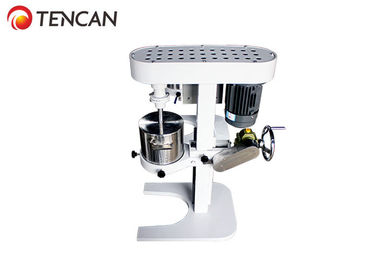
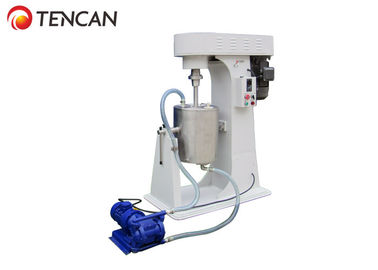
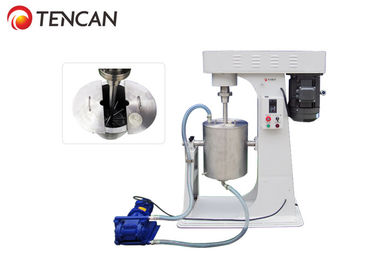
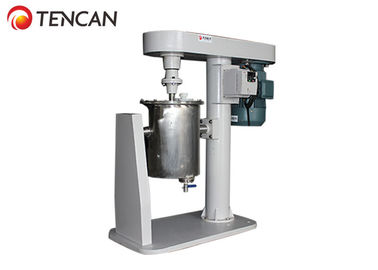
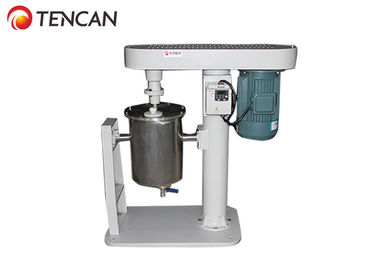
Good Performance 50L Light Stirred Ball Mill 380V-50Hz For Wet Milling Slurry
Product Details:
| Place of Origin: | Hunan, China |
| Brand Name: | TENCAN |
| Certification: | CE ISO |
| Model Number: | JM-50 |
Payment & Shipping Terms:
| Minimum Order Quantity: | 1 set |
|---|---|
| Price: | Negotiable |
| Packaging Details: | Plywood Case+Foam |
| Delivery Time: | 15-25 work days after full payment |
| Payment Terms: | T/T,Western Union |
| Supply Ability: | 100 sets per month |
|
Detail Information |
|||
| Product Name: | Light Type Stirred Ball Mill | Model No.: | JM-50 |
|---|---|---|---|
| Voltage: | 380V-50Hz | Power: | 3.0KW |
| Rotate Speed: | 60-310 Rpm | Speed Control: | Frequency Control |
| Total Volume: | 50L | Max Capacity: | 16.5L |
| Warranty: | One Year | ||
| Highlight: | 50L Stirred Ball Mill,380V Stirred Ball Mill,310 rpm Stirred Ball Mill |
||
Product Description
50L Heavy Type Stirred Ball mill Humanized Design for Operation & Electric Lifting & Falling
Overview
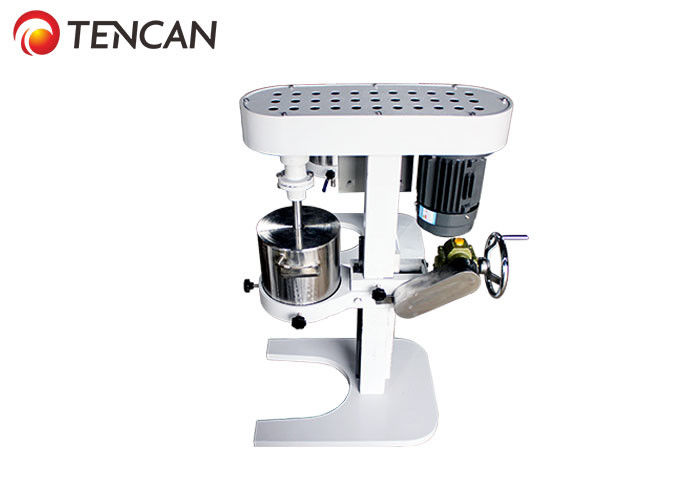
Heavy Stirred Ball Mill mainly consists of jar with inner grinding media, stirring device and other auxiliary devices such as recycling device, cooling device, timing device, speed adjusting controller, and etc. Its advantages of high efficiency and fine granularity meet technological requirements of various processes. Stirred ball mill is a kind of ideal equipment that are used to crush new materials and research painting for universities, research centers and enterprises because of its features of small batch, low power and low price.
Working Principle
When machine rotates at high speed under driving of main axis and grind media move irregularly at the same time, the grind material can be crushed, ground and sheared into fine granularity powder. The size, shape and matching ratio of the grind media can affect the grinding result. Generally speaking, the bigger the mill media is, the finer the grinding powder is. A proper match ratio of grind medias and proper adjustment of rotation speed can get better grinding effect.
Applications
Heavy Stirred Ball Mill is widely used in fields of zirconia silicate, zirconia, alumina oxide, ceramic, chemical, electronic material, magnetic material, paper-making, painting, non-metal minerals, new materials, coating, graphite, calcium carbonate, medicine, and so on.
Features
1. High utilization rate of energy, saving energy.
2. Granularity is adjustable by adjusting grinding time.
3. Less vibration, low noise.
4. Simple structure, easy operation.
5. Meet requirements of various processes, realize continuous or intermittent production.
6. Jar with jacket, easy to control the grinding temperature .
7. Customized service is available. Special functions such as timing, speed adjusting, recycling, temperature controlling can be selected and ordered.
8. A variety of grinding jars in different materials is available for customer’s option such as stainless steel, corundum ceramic, polyurethane, zirconia and so on.
Technical Parameters
| Technical Parameters of Tencan HeavyType Stirred Ball Mill | ||||||||
| Model No. | Rotate Speed (RPM) |
Total Volume (L) |
Max Load Volume (L) |
Power Supply | Available Jars | Feed Sizes (mm) |
Output Granularity (μm) |
Control Mode |
| JM-30L | 60-310 | 30 | 10.50 | 380V/3.0KW | Stainless Steel Jar Nylon Mill Jar Corundum Mill Jar PU Mill Jar Zirconia Mill Jar Agate Mill Jar PTFE Mill Jar |
≤10mm | ≤1μm | Frequency Converter or Fixed Speed setting at buyer's option |
| JM-50L | 60-140 | 50 | 17.50 | 380V/4.0KW | ≤10mm | ≤1μm | ||
| JM-100L | 60-140 | 100 | 35.00 | 380V/7.50KW | ≤20mm | ≤1μm | ||
| JM-200L | 60-110 | 200 | 70.00 | 380V/11KW | ≤20mm | ≤1μm | ||
| JM-300L | 60-110 | 300 | 100.00 | 380V/15KW | ≤20mm | ≤1μm | ||
| JM-500L | 60-90 | 500 | 170.00 | 380V/18.50KW | ≤20mm | ≤1μm | ||
| JM-600L | 60-90 | 600 | 200.00 | 380V/22KW | ≤20mm | ≤1μm | ||
Available Mill Jars & Balls
As a professional manufacturer of planetary ball mill, we not only supply various kinds of planetary ball mills, but also provide all kinds of accessories of mill jars and mill balls in full sizes.
Available mill jars: 304 or 316L stainless steel mill jars, agate mill jars, , Alumina ceramic mill jars (corundum ) zirconia mill jars, silicon nitride mill jars, nylon mill jars, PU mill jars, tungsten carbide mill jars, PTFE mill jars, and etc.

Available mill balls in full sizes: Tungsten carbide balls, Agate balls, Zirconia balls, Stianless steel Balls, Alumina balls, and etc.
| Recommendation For Matching Solutions About Mill Jars & Materials | |
| Categories of Materials | Recommended Mill Jars |
| Soil and other Materials which are not allowed with any impurity | Agate mill jar |
| Metal & nonmetal materials which are not allowed with any impurity | Zirconia mill jar |
| High hardness materials like diamond, tungsten carbide | Tungsten carbide mill jar |
| Strong add & alkali materials or other materials at high temperature | PTFE mill jar |
| Iron ore materials with lower impurity sensitivity | 304 Stainless steel mill jar |
| Pigment or other materials with later process under high temperature | Nylon mill jar |
| Aluminum materials like ceramic glaze | Corundum mill jar |
| Electronic materials like lithium battery | Polyurethane mill jar |
| Easily oxidized materials or some special materials which need to be protected under special atmosphere. | Vacuum mill jar |
| Matching Solutions for Mill Jars & Balls | |||||
| Items | Agate Balls | Alumina Balls | Stainless Steel Balls | Zirconia Balls | Tungsten Carbide Balls |
| Agate Mill jar | √ | ||||
| Corundum Mill Jar | ▲ | √ | ▲ | ||
| Stainless Steel Mill Jar | √ | ||||
| Zirconia Mill Jar | ▲ | √ | |||
| Nylon Mill Jar | ▲ | √ | |||
| PTFE Mill Jar | √ | ▲ | |||
| Polyurethane Mill Jar | √ | ▲ | |||
| Tungsten Carbide Mill Jar | ▲ | √ | |||
| √ means: recommended ▲ means: suitable | |||||
Light vs Heavy Stirred Mills: Where the JM-50 Fits
Stirred mills fall into two broad families, and the JM-50 sits at the smaller, lighter end. A light stirred mill turns a shaft fitted with discs or pins directly in a chamber of grinding beads, and the whole assembly is built compact enough for a workshop or pilot bench - the JM-50 holds 50 L with a working charge of about 16 L and draws 3 kW from a 380 V supply. A heavy mill of the same chamber size would use a sturdier shaft, a larger motor and heavier bearings to handle denser beads and higher throughput. The choice comes down to duty: for fine wet grinding of slurries in pilot quantities, the light design gives the shear needed without the bulk and power of a production machine, and it is easier to clean, move and keep running in a small plant.
Slurry Viscosity: The Variable That Decides a 50 L Run
In wet grinding, the slurry itself is part of the equipment, and its viscosity sets the pace. A slurry that is too thin lets the beads fall out of suspension, so the grinding is uneven; a slurry that is too thick stops circulating, loads the motor and can leave the mill with pockets that never see the beads. The working window is narrower on a large chamber than on a small one, because the distance the slurry must travel is greater. In practice the operator adjusts solids content and, where needed, a dispersant until the slurry moves freely and stays in suspension. On the JM-50, which is designed around wet milling, keeping that balance - thin enough to flow, thick enough to grind - is often the difference between a steady run and a stalled one.
Separating Beads from Slurry at Discharge
A stirred mill keeps its grinding media inside the chamber, so the last thing the process has to solve is getting the finished slurry out while leaving the beads behind. This is done with a separating screen or slotted plate at the discharge, sized so that beads cannot pass but slurry can. If the slots are too open, beads escape and contaminate the product and, worse, leave the chamber under-filled; if they are too fine, the screen blinds and the mill backs up. A second concern is bead wear: as beads break down, fragments small enough to pass the screen carry into the product, so the screen and the bead charge are checked together. On a 50 L mill this discharge arrangement, rather than the grinding itself, often sets the practical run length between clean-outs.
Recirculation and Flow: Running a Large Stirred Mill at Scale
Small stirred mills are usually run batch by batch; larger ones such as the JM-50 are often run in recirculation, where the slurry is pumped through the grinding chamber and back to a holding tank until it reaches the target fineness. The advantage is control - each pass is short, so the slurry does not overheat, and the loop can be sampled and adjusted while it runs. The trade-off is that the flow rate matters as much as the mill speed: too fast and the slurry passes through before it is ground, too slow and the chamber is starved. Because the JM-50 is built for wet milling with a frequency-controlled 60-310 rpm drive, the flow and the shaft speed can be tuned against each other until the loop settles into a steady, repeatable result.
Installing a 380 V, 50 L Mill: Power, Floor and Service Access
A 50 L stirred mill is a larger machine than a benchtop unit, and it needs to be sited with the same care as any three-phase equipment. The JM-50 runs on 380 V, 50 Hz at 3 kW, so it needs a properly rated three-phase supply, correct earthing and a connection made by someone qualified. It should stand on a level, solid floor, with enough clearance to load and discharge the chamber and to reach the motor, bearings and discharge screen for service. Ventilation matters too, because wet grinding warms the slurry and the room. Planning the power, the floor and the access before the mill arrives avoids the common situation where a machine is delivered but cannot be commissioned, and it makes routine maintenance a matter of minutes rather than a rearrangement of the whole area.