


 |
Laboratory Planetary Grinder XQM Series Semicircular Jar Ball Mill 0.2-200L Nano Grinding
Product Details:
| Place of Origin: | Hunan, China |
| Brand Name: | TENCAN |
| Model Number: | XQM Series (0.2L-200L) |
Payment & Shipping Terms:
| Minimum Order Quantity: | 1 set |
|---|---|
| Price: | Negotiable |
| Packaging Details: | Export packing, to be confirmed per model |
| Delivery Time: | To be confirmed |
| Payment Terms: | T/T |
| Supply Ability: | To be confirmed |
|
Detail Information |
|||
| Product Name: | Laboratory Planetary Grinder | Model Range: | XQM-0.2 To XQM-200 |
|---|---|---|---|
| Jar Volume: | 0.2 - 200 L | Jar Rotation Speed: | 0 - 1160 Rpm (model Dependent) |
| Motor Power: | 90 W - 22 KW | Jar Seat Inner Diameter: | 50 - 460 Mm |
| Jar Revolution Diameter: | F111 - F738 Mm | Net Weight: | 25 - 2725 Kg |
| Jar Type: | Semicircular / Standard Configurations | Planetary Disk: | Integrally Cast |
| Transmission: | Precision Gears In Special Materials | Safety: | Jar Holding Device And Safety Protection |
| Highlight: | Planetary ball mill 0.2-200L,Semicircular jar ball mill,Nano grinding planetary grinder |
||
Product Description
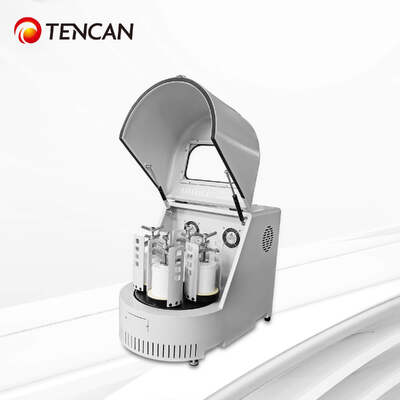
Laboratory Planetary Grinder, XQM Series with Semicircular Jars
Overview
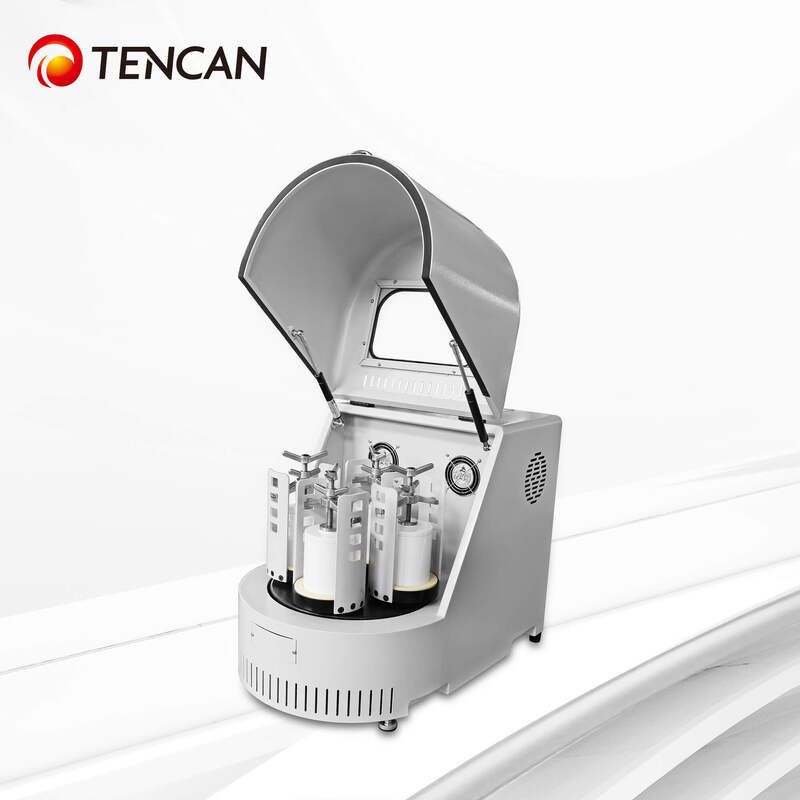
The laboratory planetary grinder is a bench-scale powder preparation machine built around a planetary drive: a main disk carries the milling jars, and as the disk turns each jar also rotates about its own axis, so the grinding balls are thrown against the jar wall at high energy. The machine is used for crushing, mixing and dispersing materials and for preparing nanomaterials, where a small quantity of sample has to reach a fine, uniform particle size in a controlled and repeatable way.
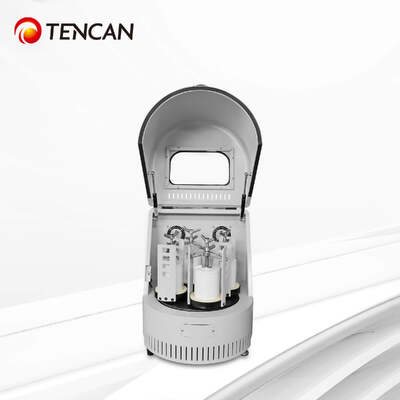
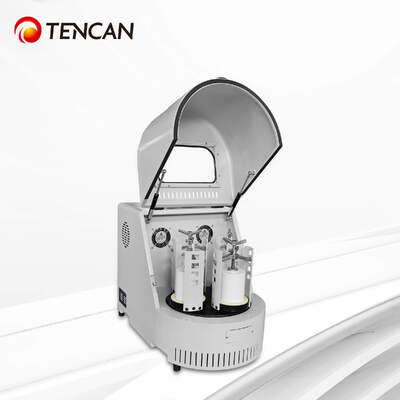
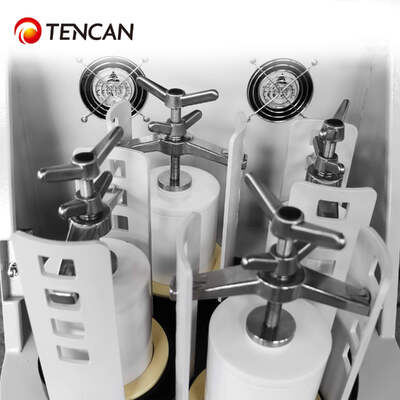
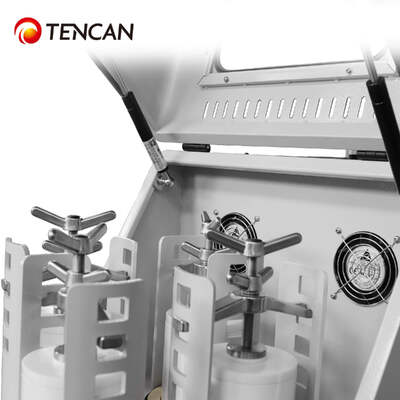
The core structure consists of the planetary disk, the ball mill jars, the grinding media, the drive system and the safety device. The semicircular jar arrangement is the distinguishing feature of this series — it makes better use of the available working space than a conventional round jar layout and improves grinding efficiency, which is what makes the design suitable for small-batch, high-precision experimental work.

Working principle
Grinding takes place through the compound motion of the planetary disk. As the disk revolves, each jar counter-rotates at a fixed ratio, and the resulting centrifugal and gravitational forces make the grinding balls travel up the jar wall and then cascade back through the sample. The material is reduced by repeated high-energy impact combined with friction and shear between the balls and the jar wall. Because the process is enclosed and the parameters are set on the machine, the same protocol can be reproduced from run to run.
Machine construction
Beyond the grinding action, the build quality is what separates a laboratory instrument from a general-purpose mill. On this series:
- The housing uses a square design language, formed with high-precision stamping dies, giving a stable and refined appearance that also protects the internal drive.
- Machined components are produced on CNC equipment, so tolerances stay consistent across units.
- The planetary disk is integrally cast in one piece, which keeps the geometry rigid under high-speed running.
- Transmission gears are made from specially selected materials and precision-cut, so the machine runs smoothly and quietly even at the top of its speed range.
- The jar holding device is designed for simple, safe and reliable clamping and release.
Applications
The grinder is used in geology, mining, metallurgy, electronics, building materials, ceramics, chemicals, light industry, medicine and environmental protection. Typical materials include electronic and structural ceramics, magnetic materials, lithium cobalt oxide and lithium manganate, catalysts, phosphors, long-afterglow luminescent powders, rare-earth polishing powders, electronic glass powders, fuel-cell materials, zinc oxide varistors, piezoelectric ceramics, nanomaterials, ceramic capacitors and MLCC, thermistors (PTC and NTC), dielectric ceramics, alumina and zirconia ceramics, zinc oxide and cobalt oxide powders, and Ni-Zn and Mn-Zn ferrites.
Technical parameters
| Model | Type | Jar rotation speed (rpm) | Jar seat inner diameter (mm) | Motor power | Jar revolution diameter (mm) | Overall dimensions (mm) | Net weight (kg) |
|---|---|---|---|---|---|---|---|
| XQM-0.2 | Miniature | 0~1160 | 50 | 90 W | F111 | 420*260*310 | 25 |
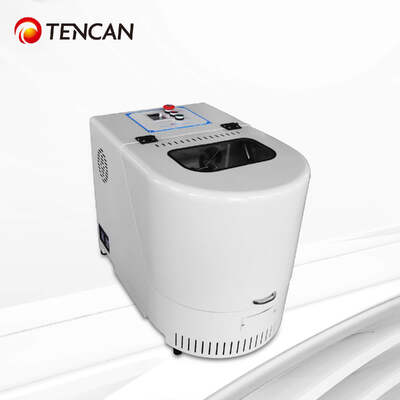
| XQM-0.2S | Mini glove box | 0~1160 | 50 | 90 W | F111 | Equipment 390*220*270; control box 200*180*240 | 29 |
| XQM-0.4A | Semicircle | 0~870 | 80 | 250 W | Φ140 | 530*300*360 | 34 |
| XQM-6 | Standard | 0~670 | 134 | 0.75 kW | F234 | 760*470*580 | 100 |
| XQM-4A | Semicircle | 0~670 | 134 | 0.75 kW | F234 | 760*470*600 | 85 |
| XQM-(8-12) | Standard | 0~580 | 162 | 1.5 kW | Φ275 | 900*600*640 | 168 |
| XQM-(8-12)A | Semicircle | 0~580 | 162 | 1.5 kW | Φ275 | 880*560*642 | 150 |
| XQM-16A | Semicircle | 0~510 | 182 | 3 kW | Φ320 | 950*600*710 | 205 |
| XQM-20 | Standard | 0~430 | 222 | 4 kW | F385 | 1200*790*930 | 392 |
| XQM-40 | Standard | 0~390 | 250 | 5.5 kW | Φ430 | 1400*880*1070 | 656 |
| XQM-60 | Standard | 0~260 (1:1.5) | 275 | 7.5 kW | Φ490 | 1600*1070*1250 | 950 |
| XQM-100 | Standard | 0~240 (1:1.5) | 326 | 11 kW | F578 | 1750*1140*1330 | 1300 |
| XQM-200 | Standard | 0~215 | 460 | 22 kW | Φ738 | 2670*1600*2804 | 2725 |
The range starts with the 0.2 L miniature unit and the 0.2S glove-box version for air-sensitive work, continues through the semicircular 0.4A, 4A, 8-12A and 16A frames that cover most laboratory workloads, and extends to the 20 L to 200 L frames for larger batches. Speed and motor power scale with jar volume.
Choosing the right configuration
Three questions decide the configuration. What working volume is needed per run — analytical quantities, routine laboratory batches, or larger pilot amounts? What jar and ball material suits the sample, given its hardness and its sensitivity to contamination? And does the protocol need programmable speed, timing and direction cycling so that results stay comparable between runs? Answering these three points before ordering avoids both an undersized drive and an oversized footprint.
Ordering information
The laboratory planetary grinder is available from 0.2 L to 200 L in miniature, standard and semicircular configurations, with jar and grinding media selected to match the material. Please confirm the sample type, the jar volume and material, and the target fineness when enquiring so that the appropriate model can be quoted.