


 |
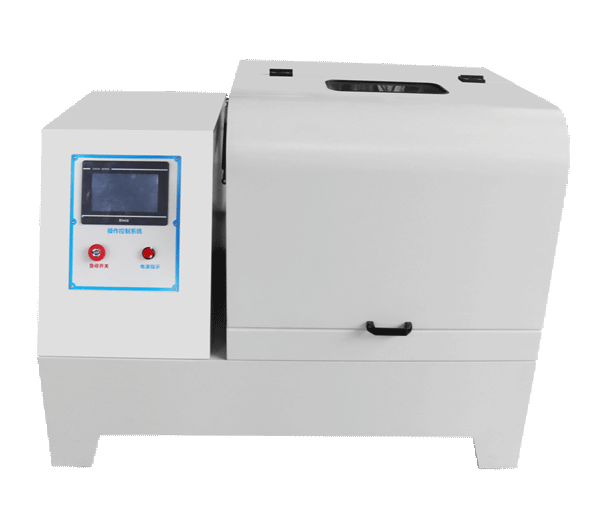
Microcomputerized Touch Screen Planetary Ball Mill XQM Series 0.2-200L Laboratory Grinding
Product Details:
| Place of Origin: | Hunan, China |
| Brand Name: | TENCAN |
| Model Number: | XQM Series (0.2L-200L) |
Payment & Shipping Terms:
| Minimum Order Quantity: | 1 set |
|---|---|
| Price: | Negotiable |
| Packaging Details: | Export packing, to be confirmed per model |
| Delivery Time: | To be confirmed |
| Payment Terms: | T/T |
| Supply Ability: | To be confirmed |
|
Detail Information |
|||
| Product Name: | Microcomputerized Touch Screen Planetary Ball Mill | Model Range: | XQM-0.2 To XQM-200 |
|---|---|---|---|
| Jar Volume: | 0.2 - 200 L | Jar Rotation Speed: | 0 - 1160 Rpm (model Dependent) |
| Motor Power: | 90 W - 22 KW | Jar Seat Inner Diameter: | 50 - 460 Mm |
| Net Weight: | 25 - 2725 Kg | Control System: | Touch Screen Microcomputer + PLC All-in-one |
| Program Storage: | Multiple Programs, Password Protected | Direction Control: | Forward / Reverse Alternating With Timing |
| Memory Function: | Power-off Memory For Running State And Programs | ||
| Highlight: | Touch Screen Planetary Ball Mill,0.2-200L Laboratory Grinding Mill,Microcomputerized Planetary Ball Mill |
||
Product Description
Microcomputerized Touch Screen Planetary Ball Mill, XQM Series
Overview
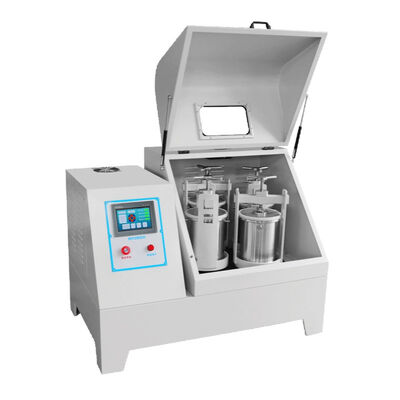
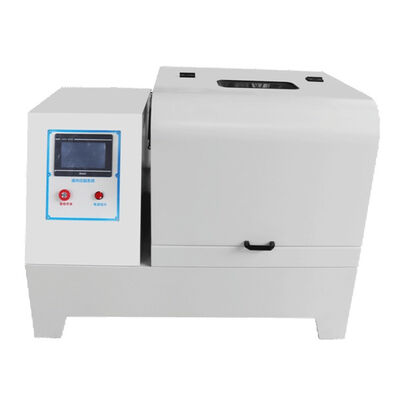
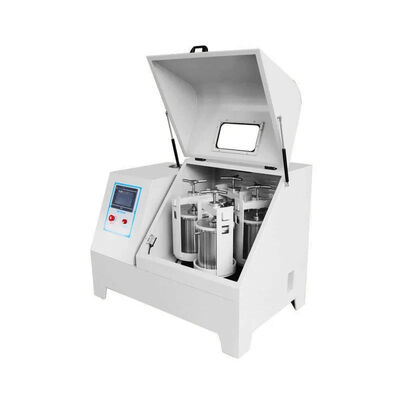
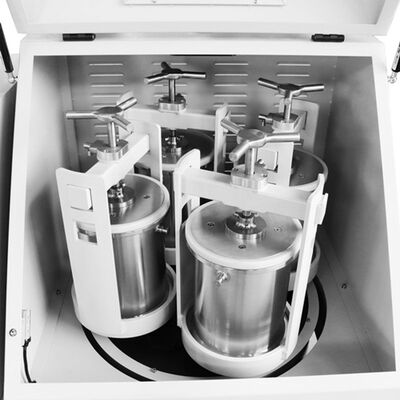
The microcomputerized touch screen planetary ball mill takes the proven XQM planetary drive and replaces the conventional control panel with a touch-screen microcomputer system. The result is the same high-energy grinding action in the jars, combined with a level of control, repeatability and process visibility that suits laboratories working to tighter protocols — and users who expect the equipment itself to match the standard of their research.
Because every function is driven through the touch screen rather than through mechanical switches, parameters such as running speed, grinding time, direction alternation and program selection can be set, stored and recalled precisely. That makes the mill suitable both for routine sample preparation and for method development work where a grinding protocol has to be repeated exactly across batches, operators or sites.
Where the machine is used
The series is applied across geology, minerals, metallurgy, electronics, building materials, ceramics, chemicals, light industry, medicine and environmental protection, and in any laboratory that prepares fine powders before analysis or further processing. Typical materials include electronic ceramics and structural ceramics, magnetic materials, lithium cobalt oxide and lithium manganate, catalysts, phosphors, long-afterglow luminescent powders, rare-earth polishing powders, electronic glass powders, fuel-cell materials, zinc oxide varistor powders, piezoelectric ceramics, nanomaterials, disc ceramic capacitors, MLCC, thermistors (PTC and NTC), ZnO varistors, dielectric ceramics, alumina and zirconia ceramics, cobalt oxide powders, and Ni-Zn and Mn-Zn ferrites.

Touch screen control system
The control hardware is built from recognised industrial components, and the software is designed around laboratory workflow rather than around the machine:
- Password protection so that stored programs and settings cannot be changed accidentally by other users.
- Free programming of grinding parameters, with multiple programs stored and recalled on demand.
- Process monitoring and fault alarms, so an abnormal condition is reported instead of being discovered at the end of a run.
- Forward and reverse alternating control with timing, which reduces caking and improves mixing uniformity.
- Power-off memory that retains the running state and program data after an interruption.
- Pressure-sensitive capacitive touch screen with a PLC all-in-one controller: responsive operation, real-time status display, and functions that can be customised to a customer's process.
Technical parameters
| Model | Type | Jar rotation speed (rpm) | Jar seat inner diameter (mm) | Motor power | Jar revolution diameter (mm) | Overall dimensions (mm) | Net weight (kg) |
|---|---|---|---|---|---|---|---|
| XQM-0.2 | Miniature | 0~1160 | 50 | 90 W | F111 | 420*260*310 | 25 |
| XQM-0.2S | Mini glove box | 0~1160 | 50 | 90 W | F111 | Equipment 390*220*270; control box 200*180*240 | 29 |
| XQM-0.4A | Semicircle | 0~870 | 80 | 250 W | Φ140 | 530*300*360 | 34 |
| XQM-6 | Standard | 0~670 | 134 | 0.75 kW | F234 | 760*470*580 | 100 |
| XQM-4A | Semicircle | 0~670 | 134 | 0.75 kW | F234 | 760*470*600 | 85 |
| XQM-(8-12) | Standard | 0~580 | 162 | 1.5 kW | Φ275 | 900*600*640 | 168 |
| XQM-(8-12)A | Semicircle | 0~580 | 162 | 1.5 kW | Φ275 | 880*560*642 | 150 |
| XQM-16A | Semicircle | 0~510 | 182 | 3 kW | Φ320 | 950*600*710 | 205 |
| XQM-20 | Standard | 0~430 | 222 | 4 kW | F385 | 1200*790*930 | 392 |
| XQM-40 | Standard | 0~390 | 250 | 5.5 kW | Φ430 | 1400*880*1070 | 656 |
| XQM-60 | Standard | 0~260 (1:1.5) | 275 | 7.5 kW | Φ490 | 1600*1070*1250 | 950 |
| XQM-100 | Standard | 0~240 (1:1.5) | 326 | 11 kW | F578 | 1750*1140*1330 | 1300 |
| XQM-200 | Standard | 0~215 | 460 | 22 kW | Φ738 | 2670*1600*2804 | 2725 |
Models range from the 0.2 L miniature unit, intended for very small sample quantities, through the semicircle-style 0.4A, 4A, 8-12A and 16A versions, up to the 200 L frame for larger batch work. Speed and motor power scale with jar volume, so the correct model is determined first by the batch size and then by the fineness required.
Choosing a model
Three practical points decide the configuration. First, the working volume per run: the 0.2 L and 0.2S units suit analytical quantities, the 4A to 16A frames cover most laboratory method work, and the 20 L to 200 L frames are used where larger batches are needed. Second, the jar and ball material, which should be selected for the hardness of the sample and its sensitivity to contamination. Third, the control requirement: a stored multi-step program with forward-reverse cycling is worth specifying when the same protocol has to be reproduced over many runs.
Ordering information
The XQM microcomputerized series is offered from 0.2 L to 200 L with touch screen PLC control, in miniature, standard and semicircle configurations. To quote accurately, please confirm the material to be processed, the jar volume and material required, and the target output fineness. Customised control functions can be discussed at the enquiry stage.