


 |
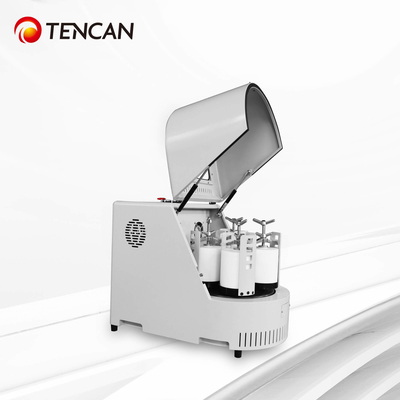
Tencan High-Energy Planetary Ball Mill for Laboratory Research and Advanced Sample Preparation
Product Details:
| Place of Origin: | Hunan China |
| Brand Name: | TENCAN |
| Certification: | ISO CE |
| Model Number: | XQM-10A |
Payment & Shipping Terms:
| Minimum Order Quantity: | 1 set |
|---|---|
| Price: | negotiable |
| Packaging Details: | Carton & Foam |
| Delivery Time: | >=7 |
| Payment Terms: | T/T |
| Supply Ability: | 200 Set/Sets per Month metal powder making machine |
|
Detail Information |
|||
| Product Name: | Planetary Ball Mill | Model Number: | XQM-10A |
|---|---|---|---|
| Voltage: | 220V/110V | Feeding Size(mm): | 1-10mm |
| Output(kg/h): | 0.1-3.3kg/h | Rotational Speed: | 70-580rpm |
| Warranty: | 1 Year | Output(mesh): | 425 - 12500 Mesh |
| Max Capacity: | 3.3L | Power: | 1.5KW |
| Highlight: | Laboratory Planetary Ball Mill,Laboratory Research Planetary Ball Mill,Advanced Sample Preparation Planetary Ball Mill |
||
Product Description
Tencan Planetary Ball Mill Ideal Equipment for R amp D Institution University and Enterprises Laboratory
Overview:
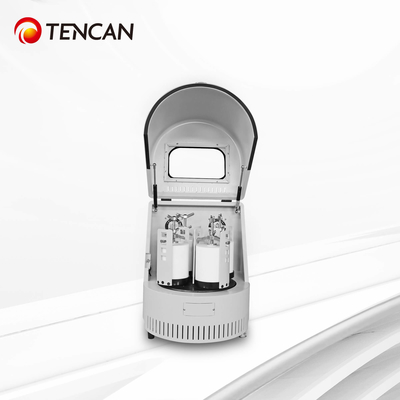
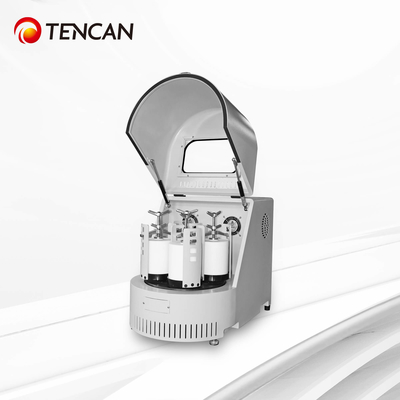
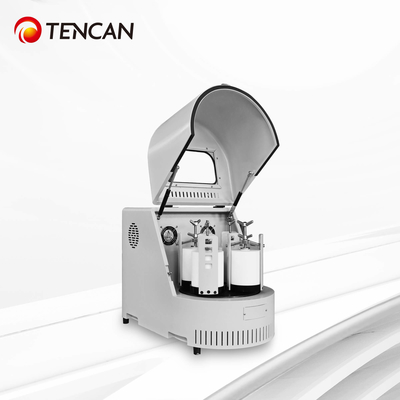
The Planetary Ball Mill is a state-of-the-art grinding machine designed for ultra-fine milling, mixing, and homogenization of dry or wet materials. Utilizing multi-directional planetary motion, it achieves high-energy impact and friction, enabling nano-scale particle size reduction (as fine as 0.1 µm).
Certified by ISO & CE, it is widely used in R&D labs, universities, and industrial production for applications such as battery materials, ceramics , nanomaterials.

| Drive Mode | Gear drive and belt drive |
| Operation Mode | Two or four grinding tanks working together |
| Maximum Loading Capacity | 2/3 of the capacity of milling tank |
| Feeding Size | Soil material≤10mm, other materials≤3mm |
| Output Granularity | Minimum 0.1 μm |
| Rotational Speed Ratio | 1/2 |
| Max. Continuous Operating Time | 72hours |
| Materials of Jar | Stainless steel, agate, nylon, corundum, zirconia, etc. |
Working Principle:
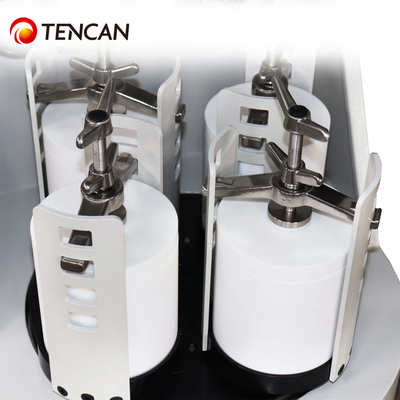
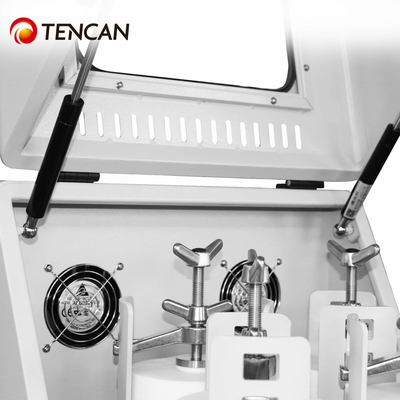
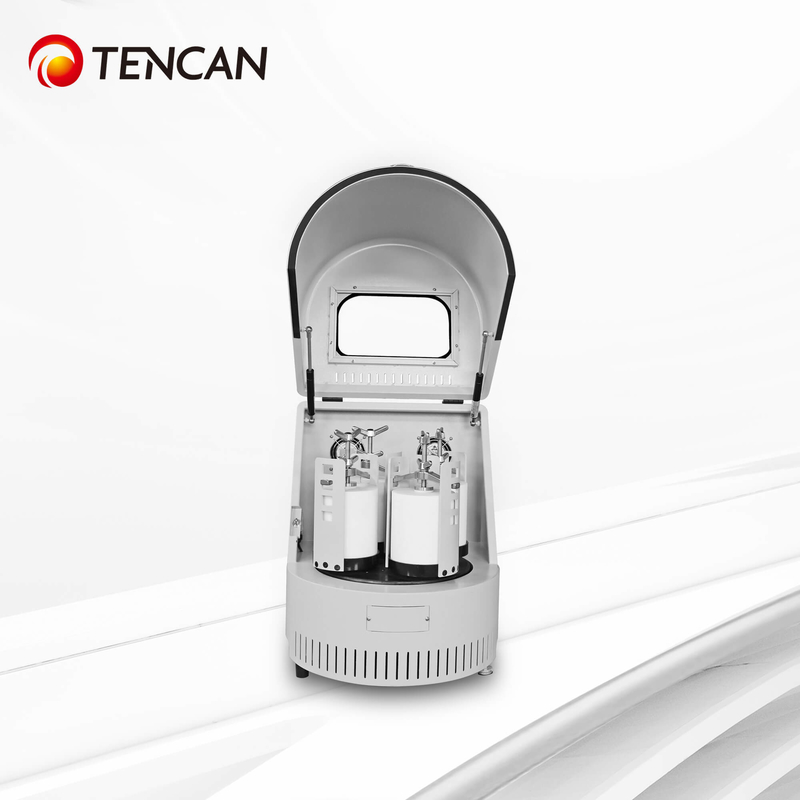
Planetary Ball Mill has four ball grinding tanks installed on one turntable. When the turntable rotates, the tank axis makes planetary movements, the balls and samples inside the tanks are impacted strongly in high speed movement, and samples are eventually ground into powder. Various kinds of different materials can be ground by the mill with dry or wet method. Minimum granularity of ground powder can be as small as 0.1μm.
Key Features
✅ Multi-Directional Grinding – 4 grinding stations for simultaneous processing
✅ Adjustable Speed – 70-670 rpm (programmable for optimal efficiency)
✅ Ultra-Fine Output – 400-12,500 mesh (adjustable particle size)
✅ Wide Material Compatibility – Metals, ceramics, polymers, composites
✅ Customizable Jars – Stainless steel, zirconia, agate, or PTFE options
✅ Safety & Stability – Low noise (<60 dB), overload protection, and secure clamping
Technical Specifications
Capacity: 0.4L – 100L (lab to production scale)
Power: 0.75 kW – 5.5 kW (110V/220V/380V available)
Grinding Media: Balls (Ø 0.1-30 mm) in various materials
Control System: Digital display, timer, and auto-reverse function
Special Options: Vacuum/inert gas compatibility, cooling systems
High-Energy Planetary Motion: Built for Demanding Materials
The XQM-10A works with two or four grinding tanks mounted on a rotating turntable. While the turntable revolves, every tank spins on its own axis in the opposite direction at a fixed speed ratio of 1:2, so the balls inside are subjected to continuous high-energy impacts instead of simple tumbling. This is why the machine can reduce powder down to 0.1 µm and is a practical choice for materials that resist ordinary milling — including metals and metal powders, hard ceramics, battery-related compounds and polymer-based composites. Because both dry and wet methods are supported, the operator can choose the process that suits the material best.
Built for Long, Unattended High-Energy Runs
High-energy grinding often needs time as well as power, and the XQM-10A is specified for continuous operation of up to 72 hours. Two operating rules protect both the machine and the quality of the result: load the tanks to no more than two thirds of their capacity, and respect the feed size limits — soil-type materials up to 10 mm, other materials up to 3 mm. The jar material is chosen to match the sample: stainless steel for general duty, agate and corundum for contamination-conscious work, zirconia for abrasion resistance, and nylon for softer or temperature-sensitive materials. With a rotational speed range of 70–580 rpm and the 220V/110V power options, the XQM-10A fits standard laboratory benches in most countries.
Matching Jars and Grinding Media to the Job
Planetary grinding is only as effective as the media inside the jars, and the XQM-10A accepts a wide choice of balls so that the process can be tuned to the sample. As a starting point, larger balls deliver a stronger impact for breaking down coarse feed at the beginning of a cycle, while smaller balls multiply the contact points needed to push the powder toward the fine end of the output range, and many laboratories combine two ball sizes instead of relying on a single diameter. The ball material deserves equal attention: stainless steel and corundum media suit general-purpose work, zirconia media combines hardness with low wear for extended high-energy runs, and agate media is preferred whenever the sample must not pick up metallic contamination. Matching the media to both the jar and the sample keeps the process efficient and protects the purity of the finished powder.
Applications
In research and development laboratories and universities, the XQM-10A is used to screen grinding parameters, explore new formulations and prepare small batches of test material before a process is scaled up. Its output range of 425–12500 mesh and throughput of roughly 0.1–3.3 kg/h place it between analytical micro-mills and production equipment, so results obtained on the bench can be carried forward with confidence. Typical fields include battery materials, ceramics, nanomaterials, metals and alloys, polymers and composites, where the mill grinds, mixes or homogenizes the charge either dry or wet according to the application. For teaching laboratories, the transparent working cycle and programmable speed also make the planetary mill a clear demonstration of high-energy comminution in action.
For laboratories planning procurement, the XQM-10A is supplied with a minimum order of one set, packed in carton with foam, and is normally dispatched within about 7 days of order confirmation; a monthly supply capacity of 200 sets keeps lead times short even for repeat orders, and T/T payment is accepted. A one-year warranty covers the machine, with the manufacturer's video and online support available after the warranty period.
Frequently Asked Questions
- Q: How fine can the XQM-10A grind a sample?
- A: The XQM-10A can reduce materials to a minimum granularity of 0.1 µm, which corresponds to the fine end of its 425–12500 mesh output range.
- Q: How long can the XQM-10A run continuously?
- A: The maximum continuous operating time is 72 hours, which makes long mechanochemical and high-energy grinding programs practical.
- Q: What feed sizes are accepted?
- A: Soil-type materials up to 10 mm and other materials up to 3 mm can be loaded directly; the tanks should be filled to no more than two thirds of their capacity.
- Q: Which jar materials are available?
- A: Stainless steel, agate, nylon, corundum and zirconia jars are available, so the grinding vessel can be matched to the hardness and purity requirements of the sample.