


 |
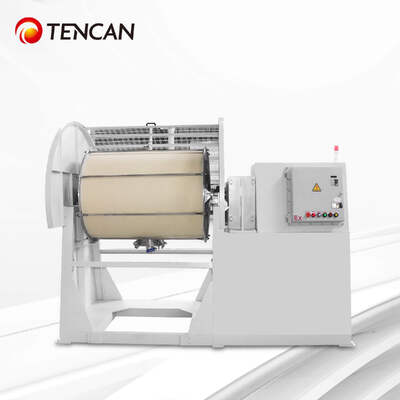
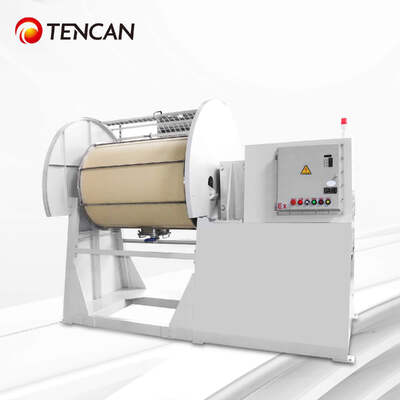
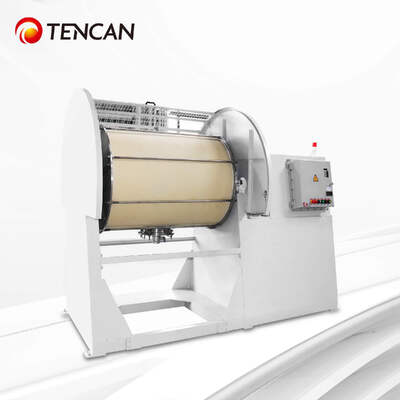
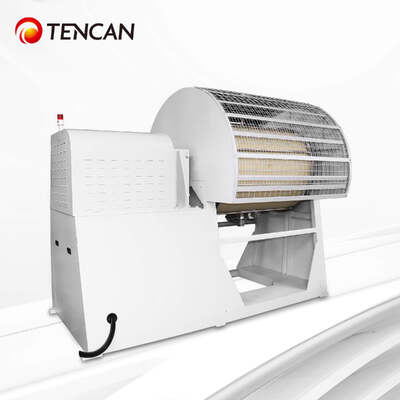
TENCAN High-Purity Nylon Drum Ball Mill Metal-Free Powder Grinding Blending Equipment
Product Details:
Get Best Price Contact Now|
Detail Information |
|||
| Highlight: | nylon drum ball mill,metal-free powder grinding equipment,high-purity ball mill blender |
||
|---|---|---|---|
Product Description

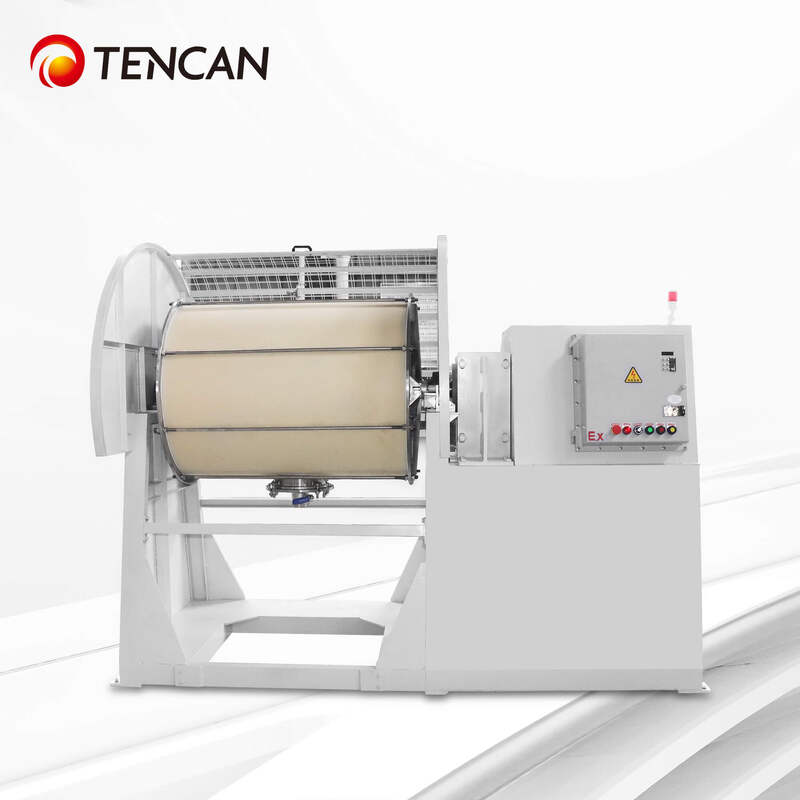
Pure Nylon Roll Ball Mill
Application Industry and Fields:
Zero metal contamination, best choice for high-purity grinding. Pure nylon roll ball mill is specially designed for grinding and mixing of high-purity materials, the pure nylon grinding barrel effectively prevents metal ion contamination, making it suitable for high-cleanliness applications such as new materials of electronics, chips and semiconductors, as well as industries like, food, and fine chemicals industries.
Specifications: 30~1000L
Loading capacity: 10.5~350L per batch
Discharge particle size: Smallest particle size reaches 0.1μm
1. Features of Pure Nylon Roll Ball Mill
1.1 Zero metal contamination, best choice for high-purity grinding
Pure nylon roll ball mill is designed specially for grinding, crushing, mixing, and dispersing high-purity materials. The equipment adopts pure nylon grinding bucket, which can effectively avoid the iron ion and heavy metal pollution that may be generated by traditional metal grinding buckets, and help ensure purity of materials.
This equipment has characteristics of wear resistance, corrosion resistance, low noise and low vibration, stable operation, and easy maintenance, and it is suitable for industries with high cleanliness requirements such as electronic materials, chips and semiconductors materials, raw materials, food additives, fine chemicals, high-end pigments, and new material research and development.
2. Why choose a pure nylon grinding bucket for high-purity grinding?
Traditional metal roll ball mills may have the following issues in processing of high-purity materials:
2.1 Metal Pollution Risk
Traditional metal grinding buckets may precipitate iron ions or other metal impurities during long-term grinding, which affect material purity and final product quality.
2.2 Insufficient Corrosion Resistance
Under acidic, alkaline or special chemical medium conditions, ordinary metal barrels may be corroded, which not only affects their service life but also may cause secondary pollution to the materials.
2.3 Excessive noise and vibration
Metal barrels are prone to produce noticeable collision sounds and vibrations during operation, which can affect the stability of equipment continuous operation and on-site operating experience.
2.4 Cleaning and changing materials are quite troublesome
Material residues of metal barrels are difficult to clean thoroughly, and cross contamination may occur when replacing different materials,which increases workload in cleaning and maintenance.
The pure nylon roll ball mill adopts non-metallic grinding buckets, which can effectively reduce risk of metal contamination, while also meeting the requirements of wear resistance, corrosion resistance, low-noise operation, and easy cleaning and maintenance. It is more suitable for the production and research and development of high-purity and high-purity materials.
3. Core Advantages of Pure Nylon Roll Ball Mill
3.1 Zero Metal Contamination
Pure nylon grinding buckets have not metal materials to contact with grinding materials directly, which can effectively reduce precipitation of iron ions and heavy metal impurities. They are suitable for grinding processes that require high material purity.
3.2 High Wear Resistance
Nylon material has good wear resistance and can withstand the friction and impact generated by long-term roll grinding, which helps to extend the service life of the grinding bucket.
3.3 Good Corrosion Resistance
Nylon grinding bucket adapts to various acid-base, alcohol, and lubricating media working conditions. The specific range of medium corrosion resistance needs to be confirmed based on the material composition, temperature, and nylon material grade.
3.4 Low Noise & Low Vibration Operation
Nylon material has certain buffering and vibration absorption characteristics, which can reduce the noise generated by the collision between the grinding medium and the barrel, making the equipment run more smoothly.
3.5 High Clean Production
Nylon grinding bucket is easy to clean and maintain, reducing material residue and cross contamination between different batches of materials, shortening the time for material replacement and cleaning.
3.6 Flexible Operation
Pure nylon roll ball mill can be equipped with frequency variable speed controller or fixed speed controller according to the end-user’s requirements.
3.7 Scalable Security Configuration
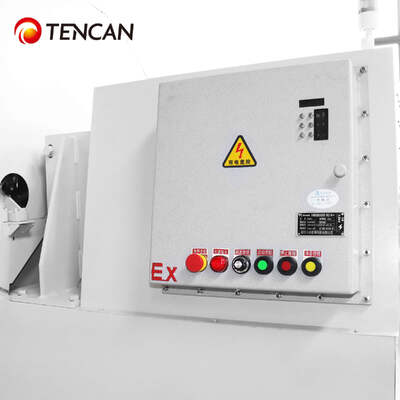
For flammable, explosive, or special material working conditions, explosion-proof electrical control, protective covers, and corresponding safety control solutions can be configured according to the working environment.
3.8 Scalable Automatic Discharge
Optional automatic discharge and ball material separation system can be used to reduce manual operation and improve discharge and batch production efficiency.
4. The complete application status of pure nylon roll ball mill in grinding semiconductor materials and chip materials.
4.1 Industry core points: The ultimate requirements for grinding cleanliness of semiconductor materials
4.1.1The powder/slurry materials in the chip industry chain are strictly prohibited from metal impurities such as Fe, Cr, Ni, Cu, etc. Trace metals (ppb level) can directly damage the insulation, dielectric, breakdown, leakage current, and sintering yield indicators of semiconductor devices.
4.1.2 Traditional stainless steel/casting iron cylinder: Friction and wear produce metal shavings, and impurities are prone to exceed the standard. High end chip materials are directly prohibited;
4.1.3 Zirconia/corundum ceramic cylinder: No metal pollution, but extremely high hardness, it is very easy to crush soft precursor powder and damage crystal morphology while grinding, and their cost are very high, and they are easy to be cracked upon collision;
4.1.3 Pure nylon integrated forming barrels: The entire grinding barrel has no metal contact, low hardness buffering, and low metal precipitation, it is suitable for wet dispersion, mixing, and fine grinding of semiconductor soft/medium to low hardness high-purity powders and slurry. It is mainly used for research and development of small-scale, pilot scale, and small batch clean production lines.
4.2 Advantages of pure nylon drum core adaptation (exclusive application for semiconductor scenarios)
4.2.1 Zero metal pollution, meeting the purity control of ppb level chips
Adopting native high-purity MC nylon or PA66 integrated molding barrel, without any metal lining, metal joints, or stainless steel bonding layer, the material only contacts nylon and non-metallic grinding media (zirconia balls, high-purity alumina balls) throughout the entire process, completely blocking introduction of iron, chromium, and nickel ions.
Compared with stainless steel cylinder: After grinding by pure nylon roll ball mill, the Fe impurities in the powder can be reduced by 100-1000 times, making it a perfect match for photolithography supporting powders, encapsulated ceramics, and high -purity target precursors.
4.2.2 Low hardness buffer to protect the native crystal structure of semi -conductor powder
l Nylon has a Shore D hardness of 75-80, much lower than zirconia and corundum. When the grinding barrel rotates, it forms an elastic buffer for the powder and grinding balls.
l Avoid excessive fragmentation and lattice defects of soft chip precursors. Reduce irreversible hard agglomeration of ultrafine powders.
l Suitable for materials such as MLCC dielectric powder, piezoelectric ceramics, and high-purity alumina polishing powder that are sensitive to particle sphericity and particle size distribution.
4.2.3 Solvent resistance and compatibility of semiconductor wet process technology
l Resistant to ethanol, isopropanol, alcohol lithography solvents, deionized water, and weak organic dispersants.
l Adapt to the mainstream wet ball milling dispersion process in the chip industry.
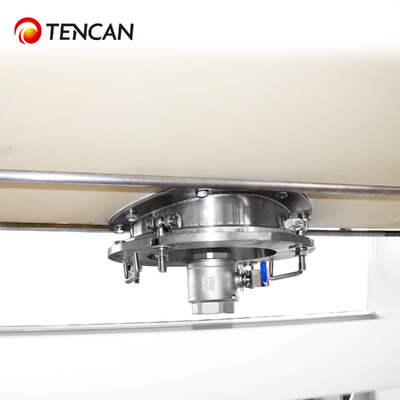
l Sealed nylon flange plus fluororubber sealing ring, no slurry leakage, no external dust cross contamination.
4.2.4 Low residue, easy to clean, suitable for switching between multiple categories of semiconductor materials
The inner wall of the cylinder is smooth and free of pores and dead corners. It can be easily cleaned by rinsing with pure water and ethanol, greatly reducing the risk of cross contamination between different batches of target powder, ceramic medium powder, and conductive silver paste. It is suitable for grinding multiple types of samples alternately in R&D laboratories.
4.2.5 Energy saving, low-noise, lightweight, and suitable for clean workshops
Nylon has a density of only 1.15g/cm ³, which is over 60% lighter than ceramic/metal cylinders of the same volume, and reduces overall energy consumption by 15% to 20%; Silent operation, no need for heavy soundproof rooms, suitable for semiconductor grade 1000/10000 clean laboratory environments.
5. Technical Parameters Table for Nylon Roll Ball Mill
| Technical Parameters Table 1 For Pure Roll Ball MIll | |||||||
| Item No. | Product Name | Model No. | Power Supply | Power (KW) |
Max Capacity (L/Batch) |
Drum Rotation (r/min) |
Speed Control Mode |
| 1 | Pure Roll Ball Mill | QM-30L | 220V-50/60Hz 1 phase 110V-60Hz 1 phase |
0.75 | 10.50 | 20-60 | Variable frequency infinite speed regulation or Fixed Rotation Speed |
| 2 | Pure Roll Ball Mill | QM-50L | 220V-50/60Hz 1 phase 110V-60Hz 1 phase |
1.5 | 17.50 | 20-50 | |
| 3 | Pure Roll Ball Mill | QM-100L | 380V-50/60Hz 3 phases 110V-60Hz 3 phases |
2.2 | 35.00 | 20-45 | |
| 4 | Pure Roll Ball Mill | QM-200L | 380V-50/60Hz 3 phases 110V-60Hz 3 phases |
4.0 | 70.00 | 20-40 | |
| 5 | Pure Roll Ball Mill | QM-300L | 380V-50/60Hz 3 phases 110V-60Hz 3 phases |
5.5 | 105.00 | 20-38 | |
| 6 | Pure Roll Ball Mill | QM-500L | 380V-50/60Hz 3 phases 110V-60Hz 3 phases |
7.5 | 175.00 | 20-36 | |
| 7 | Pure Roll Ball Mill | QM-1000L | 380V-50/60Hz 3 phases 110V-60Hz 3 phases |
11 | 350.00 | 20-34 | |
| Technical Parameters Table 2 For Pure Roll Ball MIll | ||||||
| Item No. | Model No. | Feed Size (mm) |
Output Size (mesh) |
Outline Dimensions (mm) |
Net Weight (kgs) |
Other material liners available |
| 1 | QM-30L | ≤5 | ≤300 | 1250*520*1020 | 185 | Beside nylon lining, there are PU lining, corundum lining, zirconia lining, PTFE lining for available |
| 2 | QM-50L | ≤5 | ≤300 | 1350*620*1120 | 225 | |
| 3 | QM-100L | ≤10 | ≤300 | 1350*780*1240 | 420 | |
| 4 | QM-200L | ≤10 | ≤300 | 1750*1000*1410 | 740 | |
| 5 | QM-300L | ≤10 | ≤300 | 1880*1000*1500 | 780 | |
| 6 | QM-500L | ≤10 | ≤300 | 2425*1560*1750 | 1250 | |
| 7 | QM-1000L | ≤20 | ≤300 | 2825*1750*1950 | 1550 | |
6. Application scenarios for chip semiconductor subdivision materials
6.1 Advanced electronic ceramic powders (MLCC, chip resistors, piezoelectric ceramics, maximum usage)
l Materials: high-purity barium titanate, strontium titanate, lead zirconate titanate PZT, aluminum oxide, yttrium oxide ceramic precursor powder;
l Process: Wet dispersion, ultrafine grinding, uniform mixing of slurry;
l Function: Nylon barrel prevents iron impurities from causing excessive leakage current and a decrease in breakdown voltage of capacitors; Elastic buffering preserves the spherical morphology of the powder, enhancing the sintering density and capacitance stability of ceramics;
l Application stage: R&D laboratory small-scale trial (0.5L~20L nylon barrel), pilot small-scale production line (50L~300L integrated nylon barrel).
6.2 High purity precursor powder for semiconductor target materials (sputtering targets, encapsulated ceramic targets)
l Materials: high-purity alumina, zirconia, hafnium oxide, yttrium oxide, rare earth oxide target materials.
l Common Challenges: Metal impurities in the target material can cause wafer etching defects and thin film pinholes.
l Adaptation process: dry pre-mixing, wet ultrafine grinding, paired with high-purity zirconia grinding balls; The nylon cylinder has no metal precipitation, ensuring that the purity of the powder meets the national standard for semiconductor target materials.
6.3 Chip packaging/thermal conductive ceramic powder and slurry
l Materials: aluminum nitride AlN, boron nitride BN, aluminum oxide thermalconductive filler, low-temperature co-fired ceramic LTCC raw material powder.
l Characteristics: Aluminum nitride is highly susceptible to metal ion contamination, which reduces its thermal conductivity; The nylon barrel can isolate metal throughout the entire process, while gently dispersing without damaging the sheet-like BN crystal structure.
6.4 Semiconductor conductive/insulating electronic paste (chip lead, packaging silver paste, insulating dielectric paste)
l Materials: ultrafine silver powder, platinum palladium precious metal powder, glass powder, organic carrier mixed and dispersed;
l Core value: Extremely small amount of iron impurities in precious metal powders can significantly reduce conductivity; The nylon cylinder will not wear out and produce metal debris to contaminate precious metals, while also dispersing gently to avoid excessive ball milling and oxidation of silver powder.
6.5 Wafer polishing materials, photolithography supporting high-purity powder
High purity silicon dioxide polishing powder, photoresist inorganic filler, and developing supporting functional powder; Wet grinding with weak organic solvents, nylon is resistant to light etching solvent corrosion, and does not dissolve organic impurities that interfere with lithography performance.
6.6 Third generation semiconductor precursor materials (research and development of silicon carbide and aluminum nitride powder)
Small batch grinding in university/material enterprise laboratories for mixing SiC substrate ceramic materials; The equipment is mostly small desktop pure nylon roll ball mills, suitable for inert atmosphere and simple sealing conditions.
7. Mainstream matching process combination (semiconductor standard grinding scheme)
7.1 Cylinder: Pure MC nylon integrated forming barrel (eliminating risk of lining detachment and delamination, superior to lining nylon).
7.2 Grinding medium (without metal parts)
Soft powder/precious metal slurry: high-purity nylon balls with a diameter of 1~5mm;
Ceramic oxide ultrafine grinding: high-purity zirconia microspheres (without aluminum or heavy metal precipitation);
7.3 Process mode: mainly wet grinding (deionized water/alcohol dispersant), mixed with a small amount of dry inert atmosphere.
7.4 Specifications of Equipment
Laboratory research and development: 0.5L~20L desktop nylon drum ball mill;
Pilot/small batch production: 50L~1000L industrial integrated nylon drum machine (mainstream models such as Sansho, MM Tech from Japan, MM Tech, and China Tencan).
7.5 Optional modules: water-cooling jacket temperature control (thermal lithography paste), explosion-proof motor, fully enclosed clean dust-proof shell, frequency conversion precise speed regulation.
8. Limitations of Nylon Roll Ball Mill in the Semiconductor Industry (Selection Boundaries)
8.1 Low temperature resistance limit: Long-term operating temperature ≤100~120°C, not suitable for high-temperature dry grinding, only compatible with ambient wet grinding.
8.2 Nylon is not resistant to highly corrosive media: nylon roll ball mill cannot grind concentrated strong acids, concentrated strong alkalis (hydrofluoric acid, concentrated hydrochloric acid, strong alkali etching solutions), and PTFE barrel has to be used for highly corrosive powders.
8.3 Nylon is not suitable for long-term ultrafine grinding of ultra-high hardness materials: Hard powders over Mohs (pure silicon carbide, diamond powder) will slightly wear down the nylon cylinder wall after long-term grinding, and trace amounts of nylon organic debris will mix into the powder. Zirconia bucket is preferred for such high hardness materials.
8.4 Shortcomings in large-scale industrial production: Nylon has lower mechanical strength than metal/ceramic, and the ultra large volume cylinder with a capacity of over 1000L is prone to deformation, making it only suitable for R&D, pilot testing, and small batch. The production line for 10000 tons scale still mainly uses zirconia lining bucket.
9. Industry Application Summary and Selection Suggestions
9.1 Market Positioning
Pure nylon roll ball mill is a specialized equipment for semiconductor material research and development, pilot clean grinding, and it cannot replace large-scale zirconia production mills. However, it has an irreplaceable advantages in clean and low damage in the fields of small batch high-purity soft powders, precious metal slurries, and electronic ceramic precursors. Pure nylon roll ball mill has been applied by more and more chip material enterprises and university microelectronics laboratories at an increasing speed year by year.
9.2 Selection Standard
✅ Priority should be given to pure nylon roll ball mill: materials should avoid iron/heavy metals, powder should be soft, room temperature wet process, small batch development is required, and crystal morphology needs to be protected.
❌ Not recommended for nylon roll ball mill: high temperature grinding, strong acid alkali powder, hard powder with Mohs hardness>7, large-scale production of over 1000 liters.
9.3 Key procurement requirements for the semiconductor industry
It is necessary to use original and new materials to form an integrated nylon cylinder, and it is prohibited to lined with recycled nylon; Provide SGS impurity precipitation detection report, with iron and chromium precipitation controlled at ppb level; The stainless steel casing of the entire machine is completely isolated from the grinding chamber to prevent metal debris from the shaft drifting into the cylinder and contaminating the powder.
10. Key supplements for avoiding pitfalls in the industry
10.1 Nylon taboos: Long time grinding of powders with hardness over Mohs 7, grinding temperature more than 100 ℃, and prohibition of concentrated acid-base systems.
10.2 Zirconia taboos: Long time grinding of soft piezoelectric/barium titanate powder can shatter the original spherical particles and affect the performance of electronic components.
10.3 PTFE taboos: After long-term grinding of pure hard powder, fluorine debris are easily mixed into the powder, causing abnormal insulation of semiconductor thin films.
10..4 Polyurethane taboos: Strong ketone lithography solvents, long-term immersion can cause swelling, delamination, and contaminate the slurry.